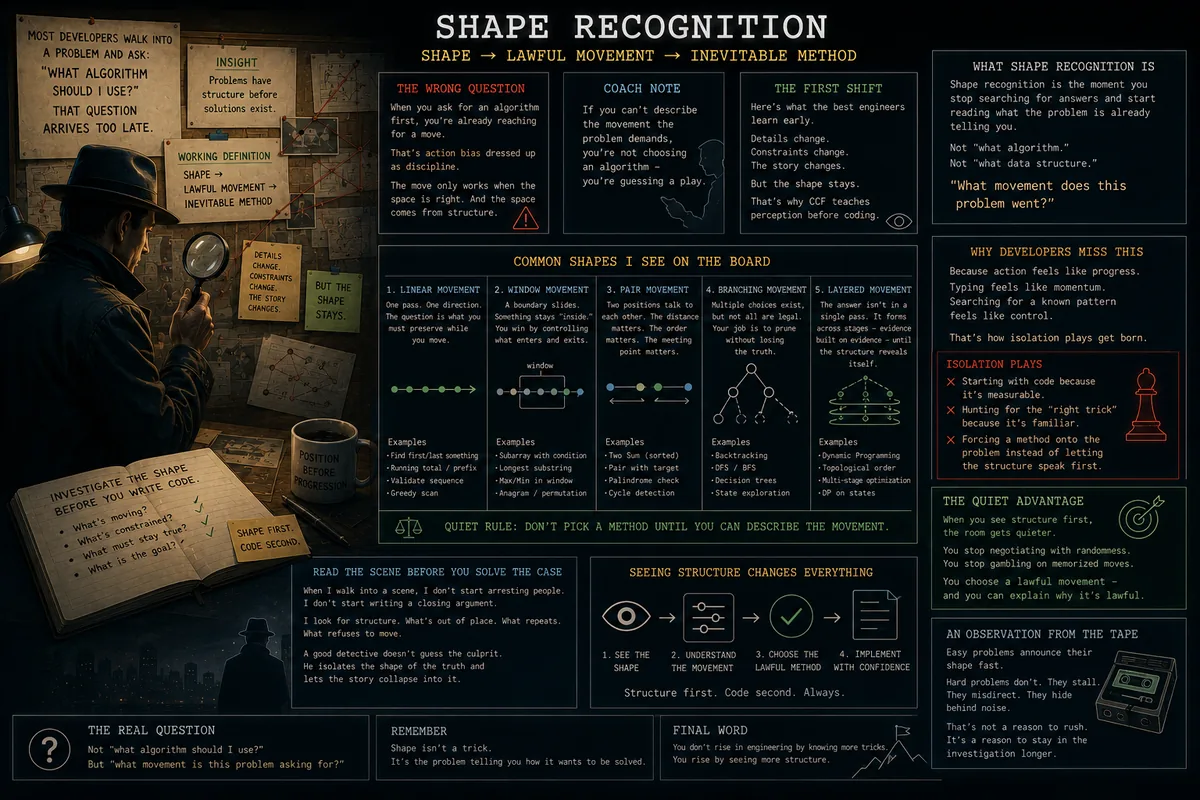
The Wrong Question
When you ask for an algorithm first, you're already reaching for a move. That's action bias dressed up as discipline.
The move only works when the space is right. And the space comes from structure.
If you can't describe the movement the problem demands, you're not choosing an algorithm - you're guessing a play.
The First Shift
Here's what the best engineers learn early.
Details change. Constraints change. The story changes.
But the shape stays.
The same structure shows up wearing different outfits. New names. New input ranges. New narratives.
That's why CCF teaches perception before coding. Because once you can see the shape, you stop asking for tricks.
What Shape Recognition Is
Shape recognition is the moment you stop searching for answers and start reading what the problem is already telling you.
Not "what algorithm." Not "what data structure."
"What movement does this problem want?"
Common Shapes I See on the Board
I don't name these to turn them into vocabulary. I name them so you can recognize the motion.
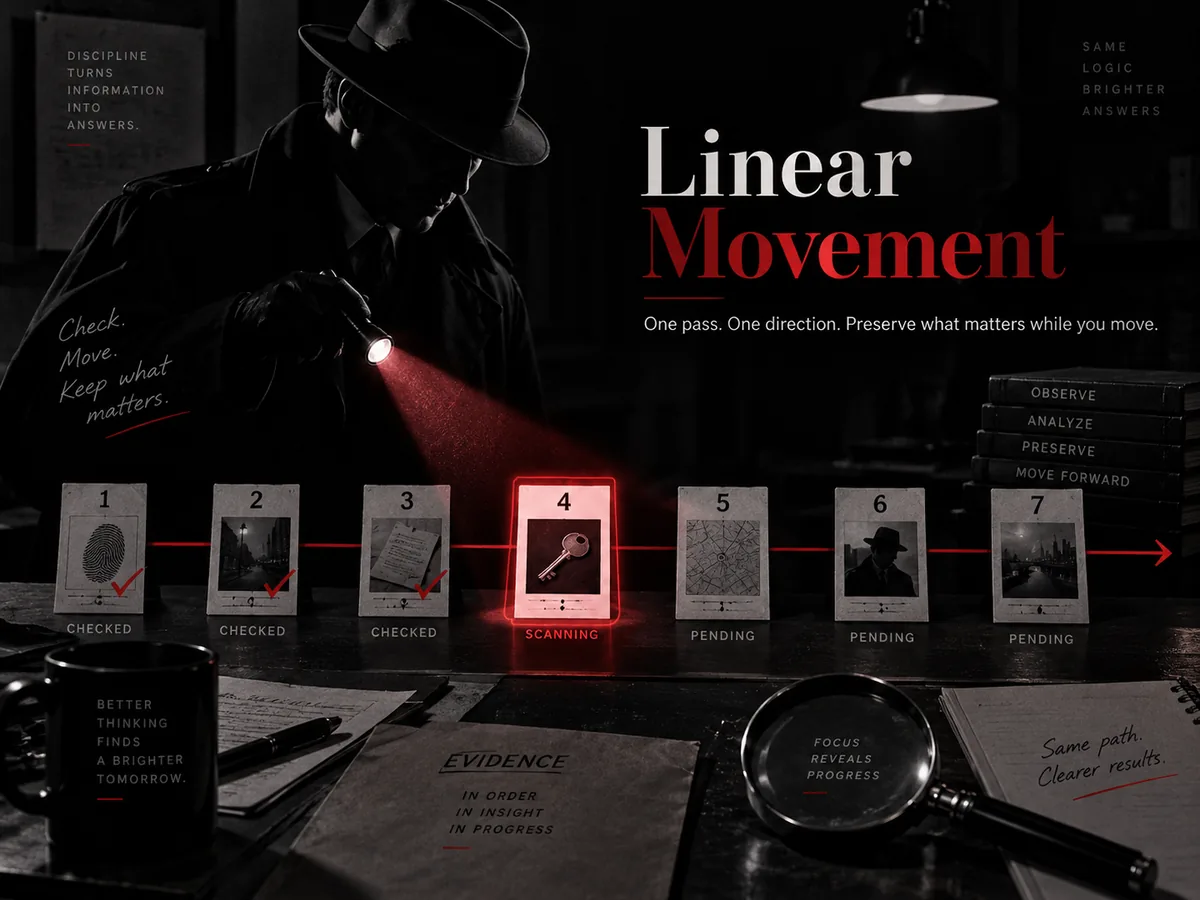 One pass. One direction. The question is what you must preserve while you move.
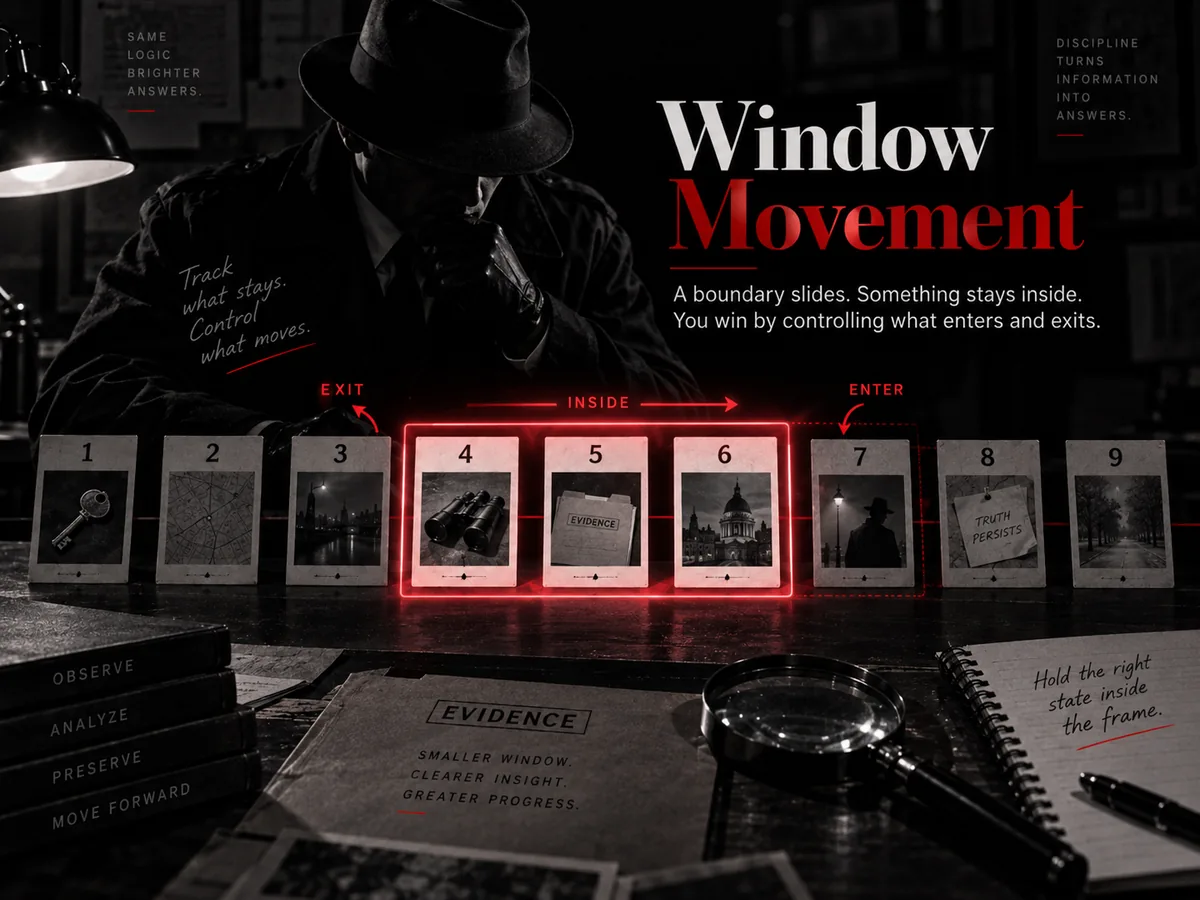 A boundary slides. Something stays "inside." You win by controlling what enters and exits.
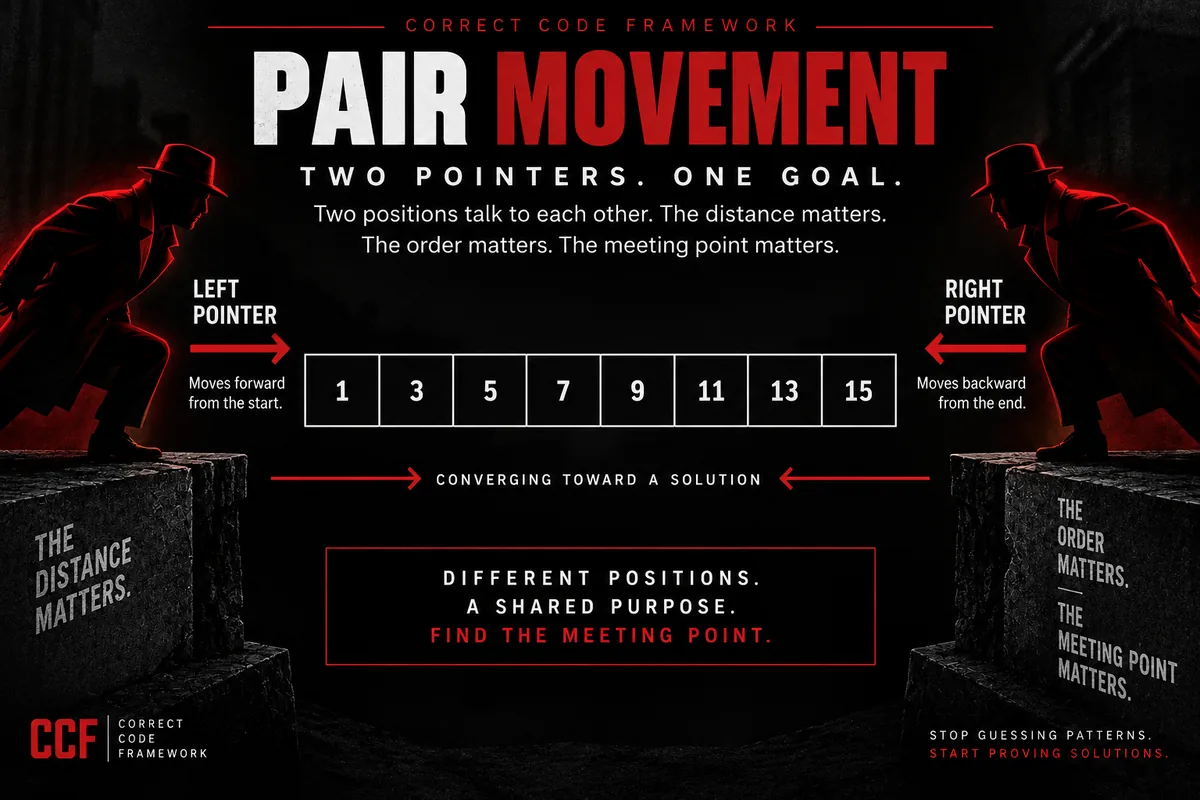 Two positions talk to each other. The distance matters. The order matters. The meeting point matters.
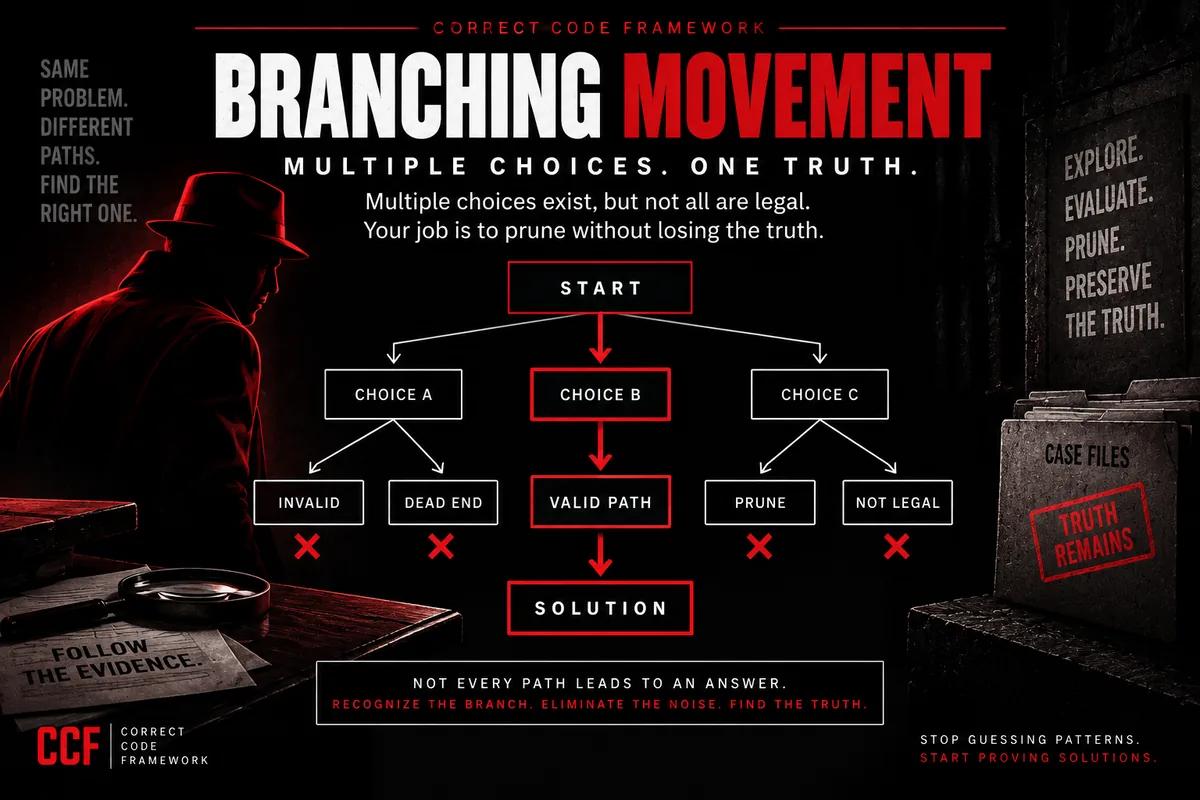 Multiple choices exist, but not all are legal. Your job is to prune without losing the truth.
The answer isn't in a single pass. It forms across stages - evidence built on evidence - until the structure reveals itself.
Read the Scene Before You Solve the Case
When I walk into a scene, I don't start arresting people. I don't start writing a closing argument.
I look for structure. What's out of place. What repeats. What refuses to move.
A good detective doesn't guess the culprit. He isolates the shape of the truth and lets the story collapse into it.
Why Developers Miss This
Because action feels like progress.
Typing feels like momentum. Searching for a known pattern feels like control.
That's how isolation plays get born. A move without positioning. A technique without a court.
- Starting with code because it's measurable.
- Hunting for the "right trick" because it's familiar.
- Forcing a method onto the problem instead of letting the structure speak first.
The Quiet Advantage
When you see structure first, the room gets quieter.
You stop negotiating with randomness. You stop gambling on memorized moves.
You choose a lawful movement - and you can explain why it's lawful.
An Observation From the Tape
Easy problems announce their shape fast.
Hard problems don't. They stall. They misdirect. They hide behind noise.
That's not a reason to rush. It's a reason to stay in the investigation longer.
What Comes Next
Shape recognition is the moment you stop guessing. Not because you got smarter - because you got positioned.
Next entry: Scanner Mindset That's where we talk about why the "right method" is usually a side effect - not a starting point.
Book Zero - The Entry Point Into Correct Code
The Tri-Angle Offense teaches you how to think differently. Book Zero teaches you how to begin applying that thinking.
This is not a textbook. It's a mental reset - a detective-style introduction to algorithmic reasoning, designed to shift how you see problems before you ever write code.
- Learn the mindset behind the CCF Framework
- Understand why reasoning beats memorization
- Step into the Ron Snow universe