Tri-Angle Offense • Opening Entry

The Ron Snow Story

Most of the developers write code like they play for a junior varsity team because they make architecture decisions while writing code, based on past experience, recall and intution.

The Framework teaches how to make well reasoned decision based on what you know about the shape of the problems space.

And we win, consistently. That’s discipline.

The Tri-Angle Offense

Stop Executing Isolation Plays

I see isolation plays all the time. They usually look like this:

  • Jumping into code before defining the problem.
  • Copying patterns without understanding the reasoning behind them.
  • Fixing symptoms instead of stepping back to examine the system.
  • Searching for the “right algorithm” instead of reading the shape of the problem.

Isolation plays feel productive — until the game changes.

I’ve watched smart people lose games they should’ve won — not because they lacked talent, but because they had no system. They chase syntax. They memorize plays. They copy solutions they don’t understand. And when the pressure shows up — a new problem, a new constraint, a new environment — everything falls apart.

Junior varsity coding is reaction.
Tri-Angle thinking is positioning.

This blog is where we install that positioning — one entry at a time.

The Ron Snow Story

I didn’t arrive here overnight. The Ron Snow story isn’t about becoming the fastest coder in the room. It’s about becoming the calmest mind in the room — the one who sees the floor before the ball even moves.

Core realization: Most developers think coding is execution. The real game is decision-making.

Every problem has three forces pulling against each other:

  • Intent. What are we actually trying to accomplish?
  • Scope. What boundaries define the problem space?
  • Route. What path preserves correctness while moving efficiently?

When those three align, the game slows down. The noise disappears. Solutions stop feeling random.

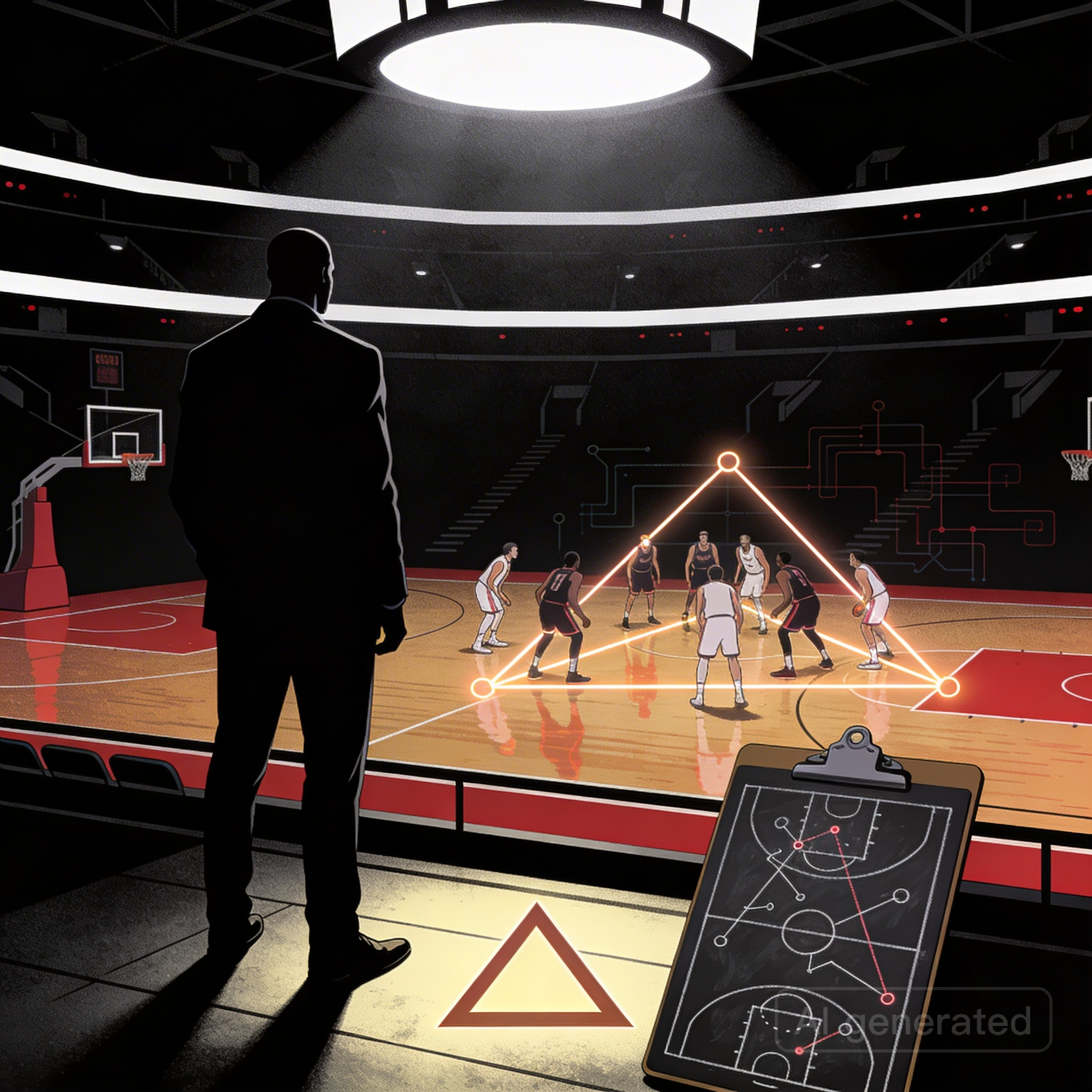
That’s the Tri-Angle.

In basketball, the triangle offense creates spacing — options that appear naturally because players understand their roles and positions. In engineering, the same idea applies. You don’t force solutions. You create structure so the right move becomes obvious.

Most developers are running isolation plays.
I run systems.


That’s why this blog exists.

The Tri-Angle Offense isn’t about tricks, hacks, or memorized patterns. It’s about learning to see the hidden geometry behind problems — the structure that elite engineers recognize before they ever touch a keyboard.

Here, we break cases down like detectives.

We study decisions like film.

We treat algorithms like contracts.

And we ask one question before every move:

What shape does this problem want me to see?

You’ll hear stories here — case files, breakdowns, moments where logic almost collapsed but didn’t. You’ll learn why most solutions fail before they begin, and how to build reasoning that holds under pressure.

Because coding isn’t the game.

Thinking is.

Up Next: The Tri-Angle Explained

Intent → Scope → Route. The blueprint entry that turns “strategy” into repeatable moves.
  • How to choose the correct “shape” before code
  • How to keep solutions lawful under pressure
  • Why discipline beats memorization
Next Next
No hype. No tricks. Just structure.
Start Here

Book Zero — The Entry Point Into Correct Code

The Tri-Angle Offense teaches you how to think differently. Book Zero teaches you how to begin applying that thinking.

This is not a textbook. It’s a mental reset — a detective-style introduction to algorithmic reasoning, designed to shift how you see problems before you ever write code.

  • Learn the mindset behind the CCF Framework
  • Understand why reasoning beats memorization
  • Master Algorithmic Design
Book Zero
Learn More Learn More
Learn how to the detective engine applies to algorithms.