Movement
I've watched developers spend more time searching for an algorithm name than reading the problem in front of them.
It looks like discipline. But it's just motion.
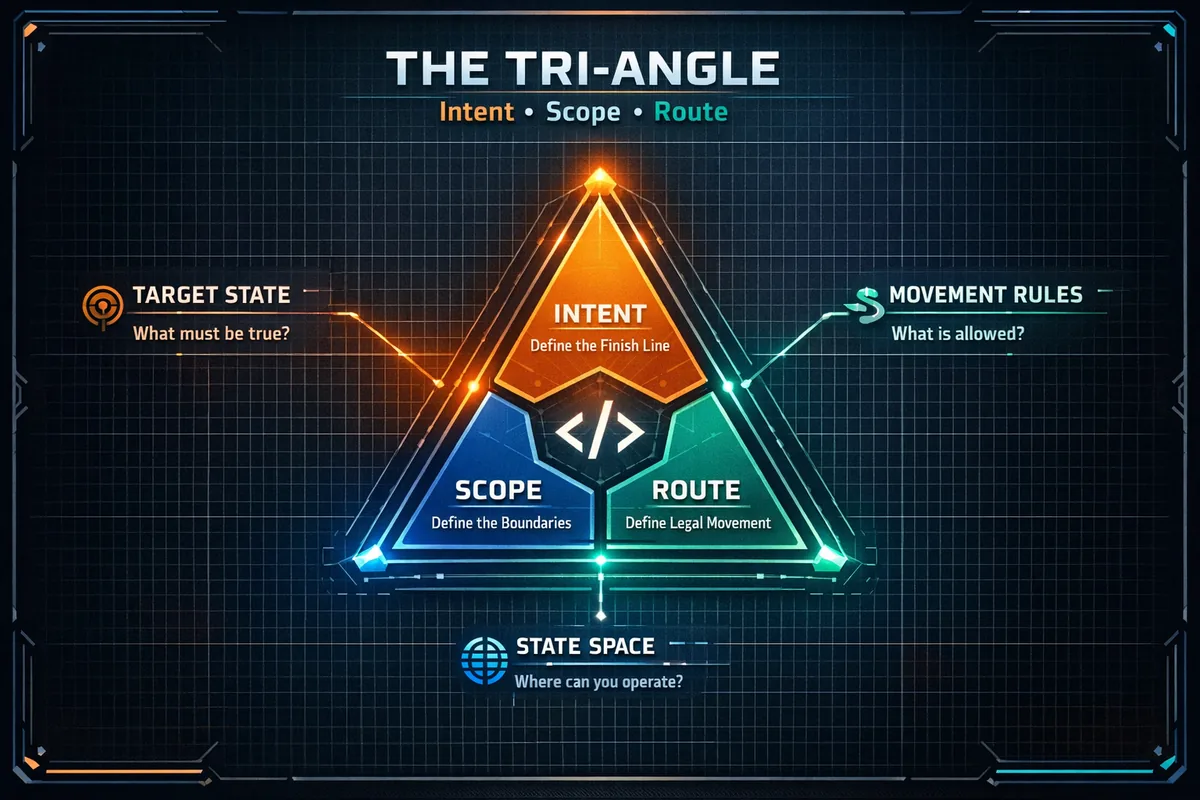
If your first move is to reach for an algorithm, you're already running a play before you know the floor.
Algorithms Are Outcomes
The algorithm is not the plan.
It's the shape of your plan once it becomes concrete.
That's why two different engineers can read the same problem and land on the same method - without ever "looking for it."
They weren't searching for an answer. They were reading structure and walking a lawful route through it.
The Better Questions
When you stop looking for algorithms, you start asking quieter questions. The kind that don't feel flashy - but they always pay.
- What must be true at the end? (Intent)
- What boundaries define what's legal? (Scope)
- What movement preserves correctness? (Route)
- What shape is already present? (Structure)
Answer those, and the algorithm stops being a mystery. It becomes the obvious consequence.
Film Room, Not Highlight Reel
People want highlights. A clean trick. A famous pattern. A single move that ends the possession.
But the game is won in film. In the slow frames where spacing is decided. Where the defense tells on itself.
In CCF, that's the investigation phase. The part most people skip because it doesn't look like progress.
Why "Algorithm-First" Keeps Failing
Because it turns reasoning into a scavenger hunt.
You aren't studying the problem. You're trying to match a silhouette.
- Picking a method before defining the finish line.
- Forcing a known trick onto unfamiliar constraints.
- Confusing "I've seen this before" with "I understand this now."
The Quiet Advantage
When you stop hunting for algorithms, the room gets calmer.
Not because the problem got easier. Because your process got lawful.
Ron Snow Observation
The hardest problems don't hide the algorithm.
They hide the structure.
That's why rushing to a method feels like progress - until it collapses. The case wasn't solved. It was just named.
What Comes Next
If algorithms are outcomes, then the real leverage is upstream.
Next entry: Proof Isn't Confidence. That's where we talk about how to know your movement is legal - before the game gets loud.
Book Zero - The Entry Point Into Correct Code
The Tri-Angle Offense teaches you how to think differently. Book Zero teaches you how to begin applying that thinking.
This is not a textbook. It's a mental reset - a detective-style introduction to algorithmic reasoning, designed to shift how you see problems before you ever write code.
- Learn the mindset behind the CCF Framework
- Understand why reasoning beats memorization
- Step into the Ron Snow universe